African Boxthorn
Biology
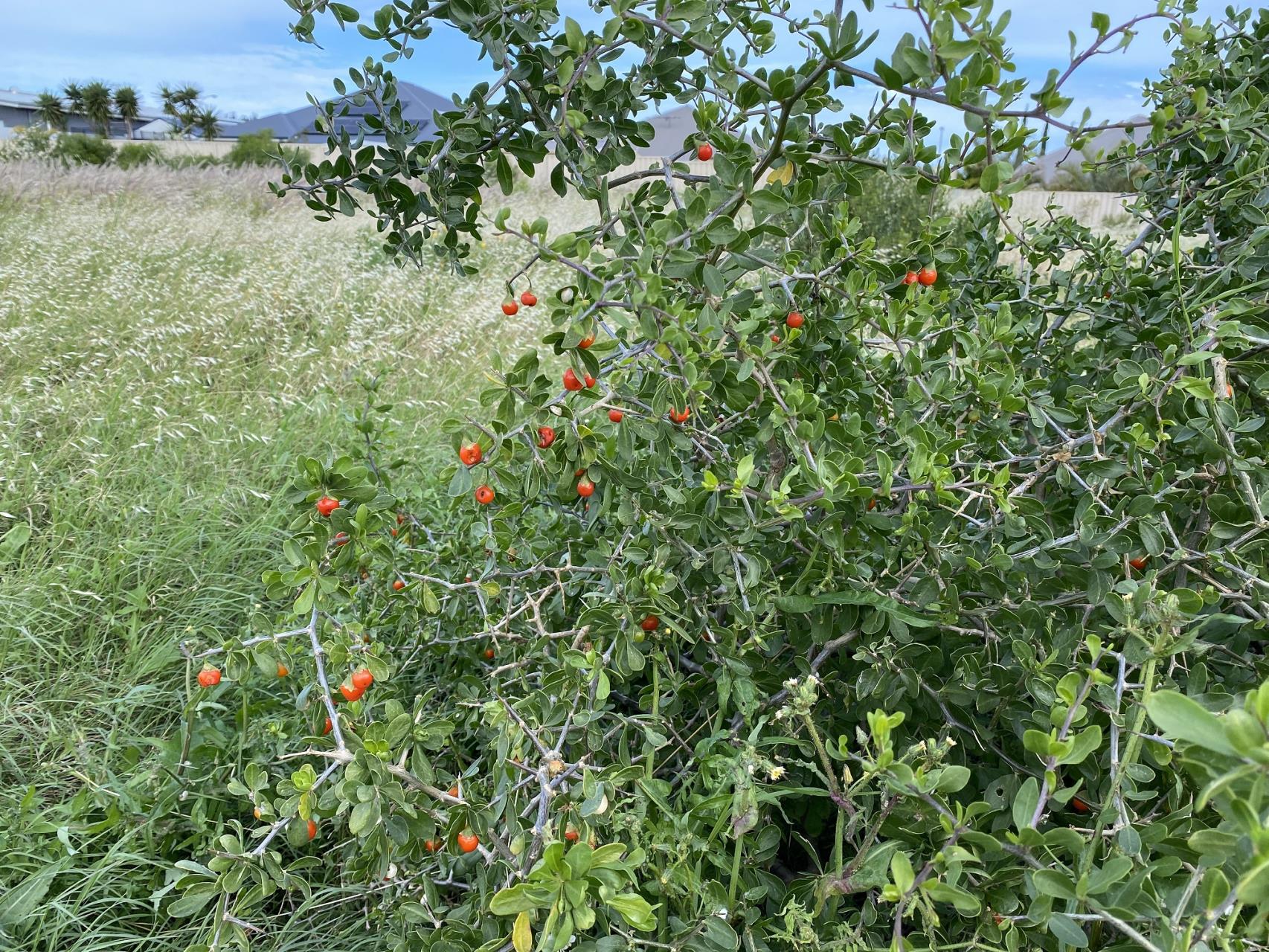
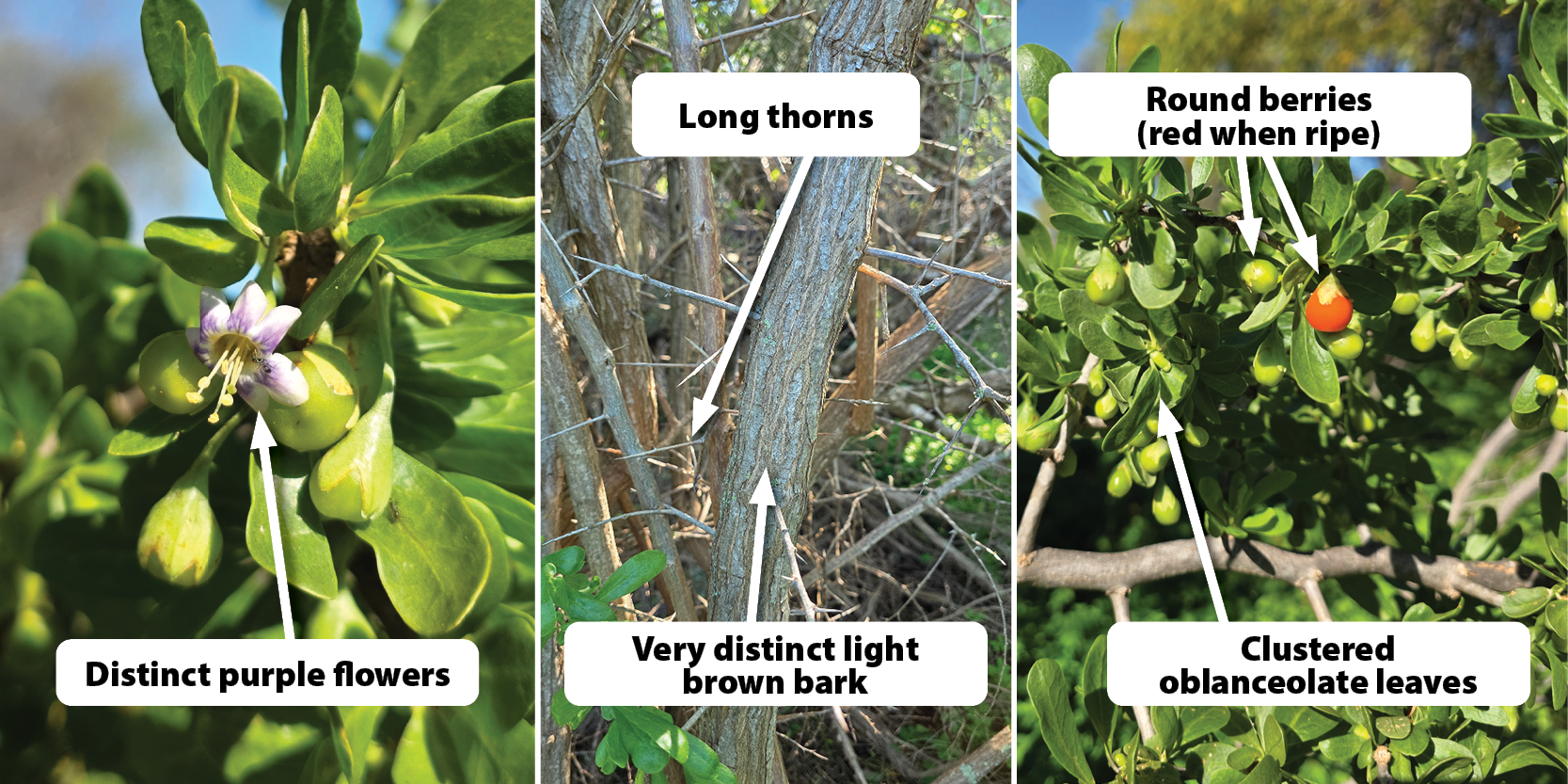
African boxthorn (Lycium ferocissimum) is a woody shrub with large thorns that can grow up to 5m tall. Boxthorn becomes dormant over the hotter months appearing dry and dull. However, after high rainfall the plant will start actively growing again and begin producing red berries. Boxthorn plants reproduce by seed, which is easily dispersed by animals, and can also regrow from disturbed root systems.
Boxthorn plants grow densely together, particularly near watercourses. They outcompete native plant species and can prevent animals, including livestock, accessing water. Feral animals such as rabbits, foxes, and rats use the thickets as shelter.
Managing Boxthorn
African boxthorn is classed as a Weed of National Significance however is not a Declared Pest on the Western Australian Organism List under the Biosecurity and Agricultural Management Act 2007 (WA). In the City of Greater Geraldton, it is listed in the Pest Plant Local Law (2011) which requires landholders to control boxthorn on their own property. More information can be found in the City’s Pest and Weed Management Framework.
The City’s Environmental team use contractors to control boxthorn in high priority natural areas. Contractors treat boxthorn in the wetter months as this is when the boxthorn is actively growing.
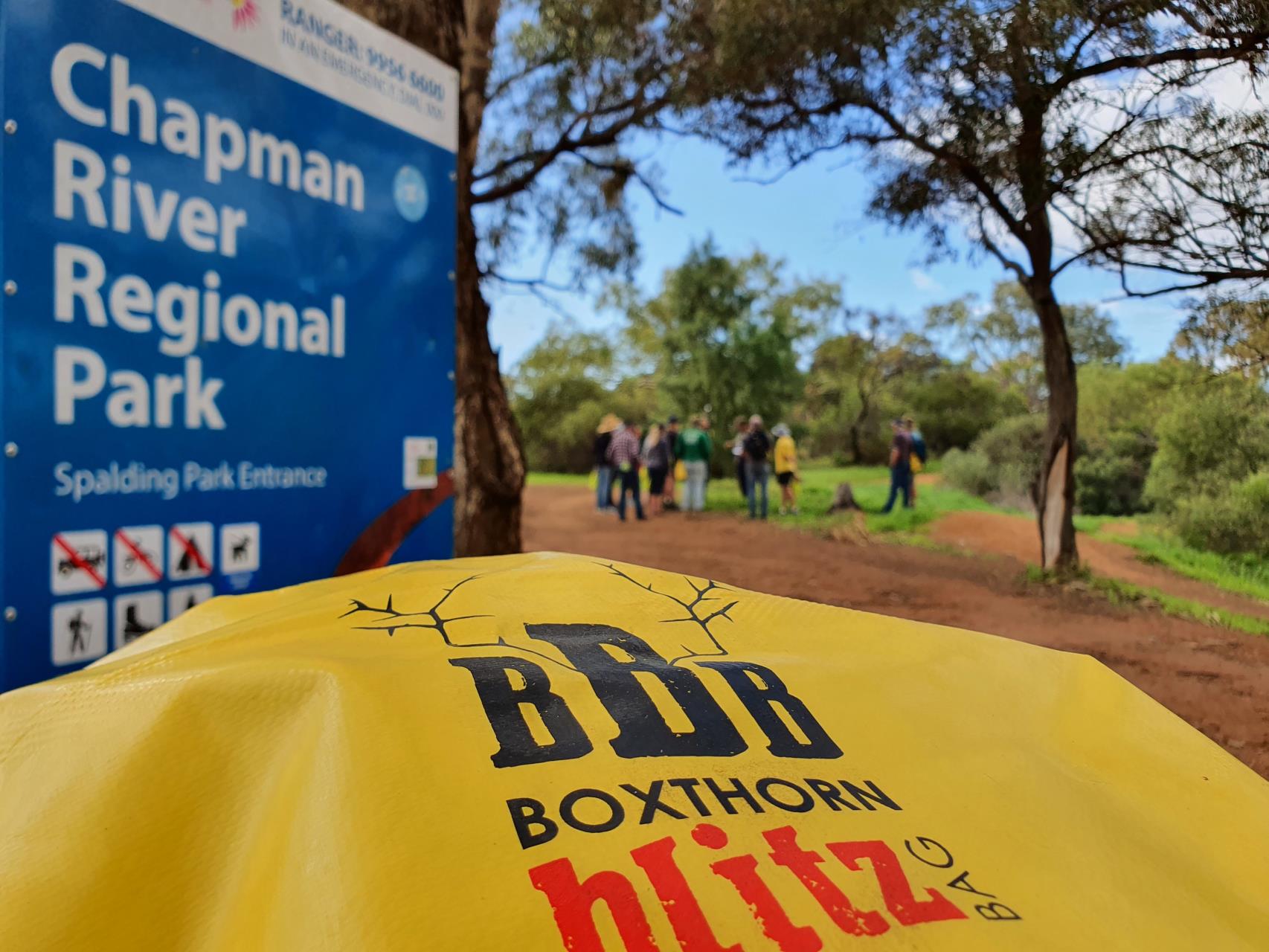
To assist with follow up treatment of the smaller plants and monitoring, the City holds annual Boxthorn Blitz workshops for the community. Workshops are held in the winter months and participants are educated on how to treat small boxthorn plants such as on their own properties. Email environmentalplanning@cgg.wa.gov.au to put your name on the register to receive workshop updates.
Areas where boxthorn has been treated in the natural areas is revegetated using local provenance plants grown by volunteers at the Geraldton Community Nursery.
More information on how to treat/remove boxthorn can be found here
See an information booklet here for identification and treatment.
African boxthorn biocontrol
Over the course of a week in June 2026, CSIRO in partnership with the City of Greater Geraldton will be releasing an African Boxthorn biocontrol agent across four research monitoring sites around Geraldton. It will be released under controlled conditions and the sites will be monitored overtime to measure establishment, spread and impacts on African boxthorn.
This work forms part of a national CSIRO-led African boxthorn biocontrol project funded by the Australian Government’s Future Drought Fund, in partnership with the Centre for Invasive Species Solutions.
What is biocontrol?
Biological control (biocontrol) uses a natural enemy of a weed, such as an insect or fungus, to help manage it over the long term. Unlike herbicides, biocontrol agents are living organisms that can establish and spread naturally once released. Biocontrol does not eradicate weeds on its own, but it provides a sustainable, long‑term and landscape‑scale tool that complements other control methods and can reduce reliance on repeated chemical treatments.
What is the biocontrol agent?
The biocontrol agent being released is a naturally occurring rust fungus, Puccinia rapipes. This fungus was originally sourced from South Africa, where African boxthorn is native. After many years of testing by CSIRO, the fungus was shown to be highly specific to African boxthorn and cannot damage native Australian plants or agricultural crops. It was approved for release in Australia following extensive regulatory assessment.
The fungus infects the leaves of African boxthorn, reducing the plant’s ability to photosynthesise, grow and reproduce. Over time, repeated infections can weaken plants and reduce their spread and density across the landscape.
Biocontrol cannot replace existing control methods such as mechanical removal or herbicide application. However, when used at broad scales, it has the potential to complement current management efforts, reduce reinfestation pressure, and support more sustainable, long‑term control of African boxthorn across the region.
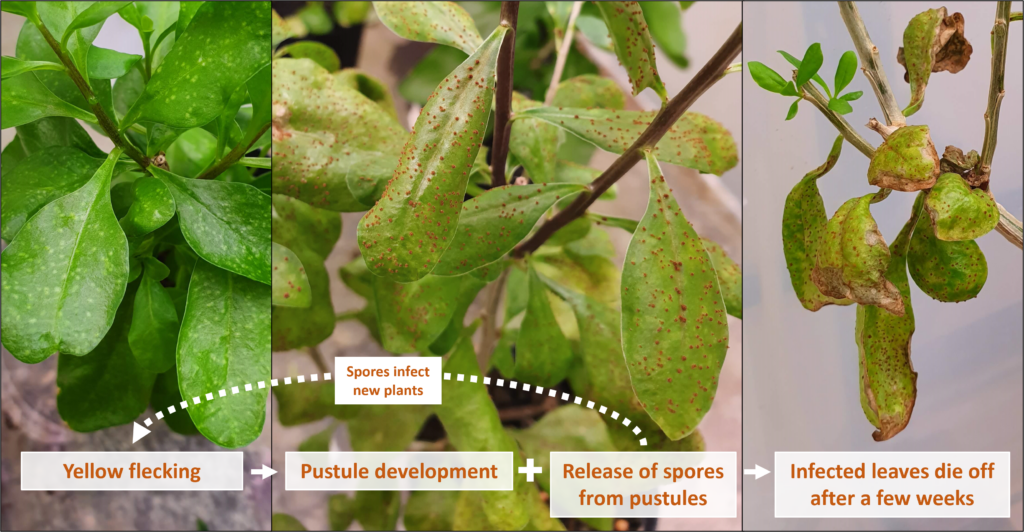
Photo credit: CSIRO
Getting involved
Community members, landholders and organisations interested in participating in the African boxthorn biocontrol program can receive the biocontrol agent for release on their own land or sites they manage. To register interest, please contact CSIRO Project Officer Caroline Delaisse at: boxthornbiocontrol@csiro.au
For more information on the biocontrol visit CSIROs Future Drought Fund – African boxthorn biological control
Community-led biocontrol for African boxthorn and drought resilience
Information sheet for the African boxthorn biocontrol agent
History of African Boxthorn
African Boxthorn, Lycium ferocissimum, arrived in Geraldton in 1895 when Mr Henry Sewell bought seeds from a South Australian seed merchant.
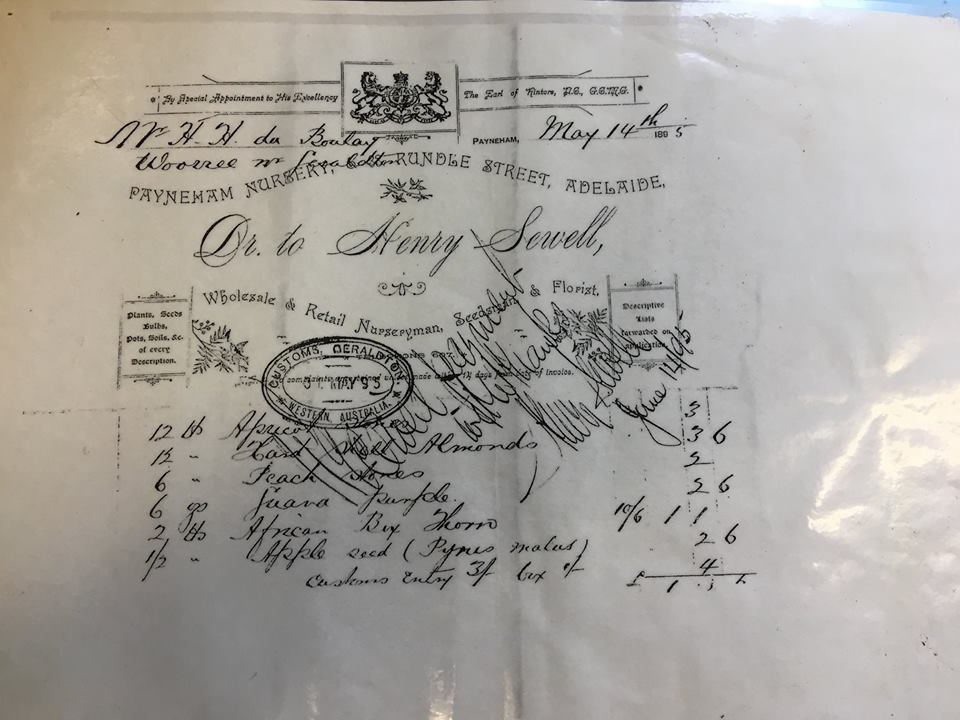
Photo: Original receipt for the first African Boxthorn seeds arriving in Geraldton in 1895.